Here are some examples of pedagogical experiments IPCRES have designed and delivered via workshops and specialised events. We can produce creativity workshops for educational establishments, museums, galleries and creative enterprises.
THE IPCRES FOUNDATION
Is an educational training facility consisting of projects designed to stretch the students knowledge of what can be considered creative. Categories and disciplines are unimportant as emphasis is placed upon replacing cliched conceptions of art and creativity with an open field of potential for each student to explore their capabilities. These projects are suitable for arts students of 16yrs and over.
IPCRES VERONICAS PROJECT
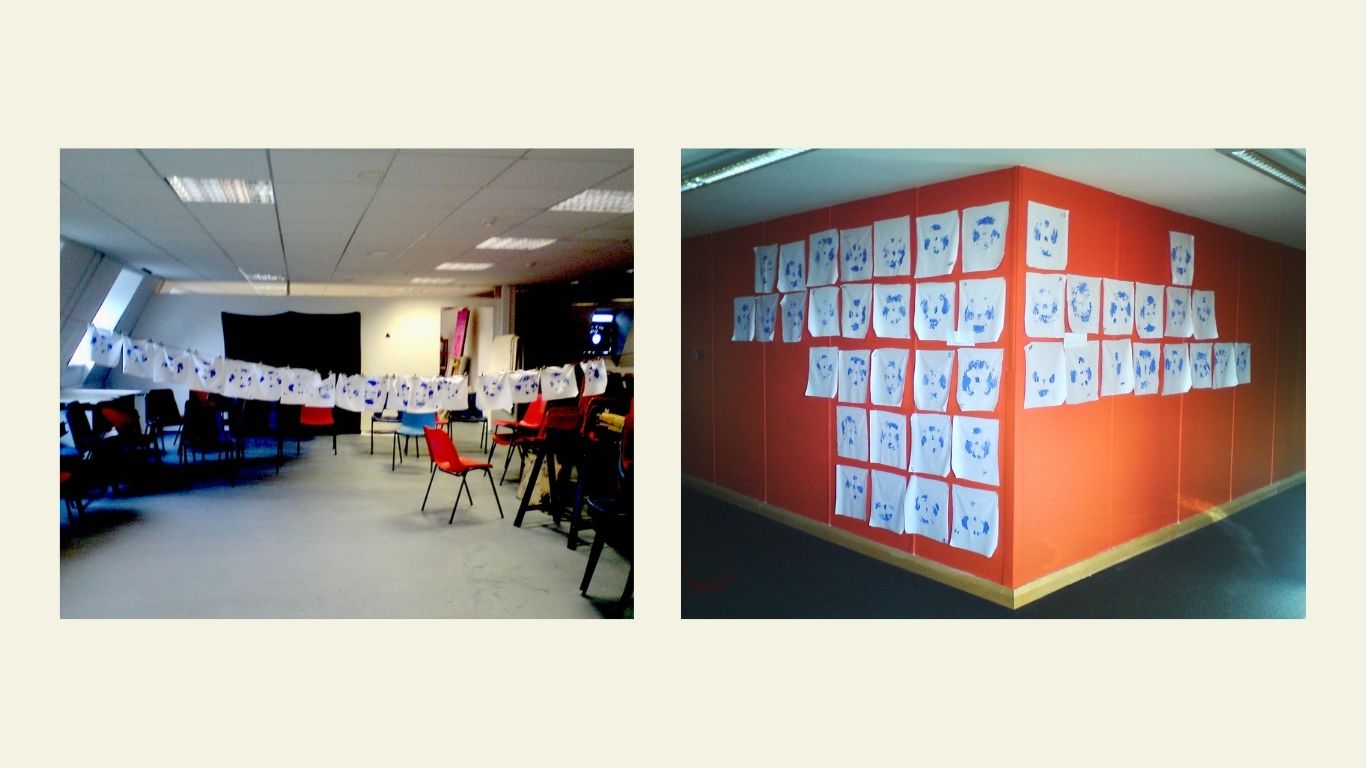
An initiation project concerned with the making of anti-identity ‘cards’. This is an opportunity to understand better the concept of identity.
OBJECT AND TESTIMONY ARCHIVE
What is an object? What do objects mean? How do they fit into our lives? Can they speak to each other? How do they speak to us? How do they contain experience? A gathering of people, a gathering of objects, what can we make of the situation?
RE-ENACTMENT OF THE IPCRES READING ENSEMBLE
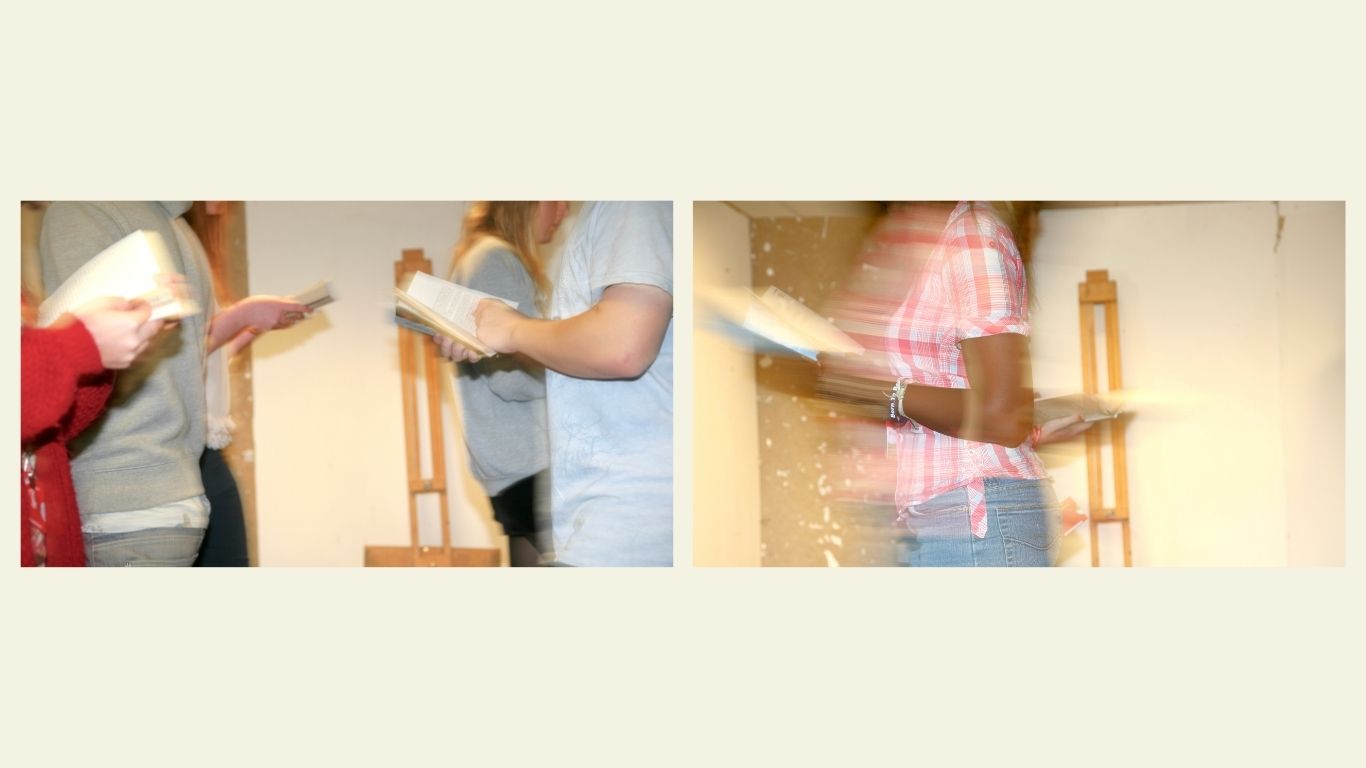
The IPCRES Reading Ensemble is an example of the type of event and situation inspired expression that the Research Centre is engaged in. It can be called a ‘performative encounter’ and is formulated as an ‘affective composition’. This means that as a work it is designed to be performative and participatory and to generate experience. This experience may not always be explainable but will have some affect on an individual’s sensibility and sensory experience. This particular work is prompted by The Large Hadron Collider experiment in Cerne, Switzerland, and so tries to raise the consciousness to the approximation of ‘parallel or multiple’ universes to our everyday experience. It is designed to challenge young assumptions of what art can be.
THE ENVELOPE OF SILENCE
A participatory lecture with a difference, it looks like a formal lecture experience but soon breaks down into unexpected directions. This concerns a lecture on a famous painter that concentrates on the experience of sound and movement. The idea is for students to understand that artworks are not closed unities but hold further potential to be utilised in many creative situations.
FOLDED NARRATIVES
A fun game for students to learn about the potentiality of futures as arts projects unfold. This is a participatory project for a group of students or perhaps working in pairs. The future is not set, and particularly with art it is our own creativity that determines possible futures.
INVISIBLE ART
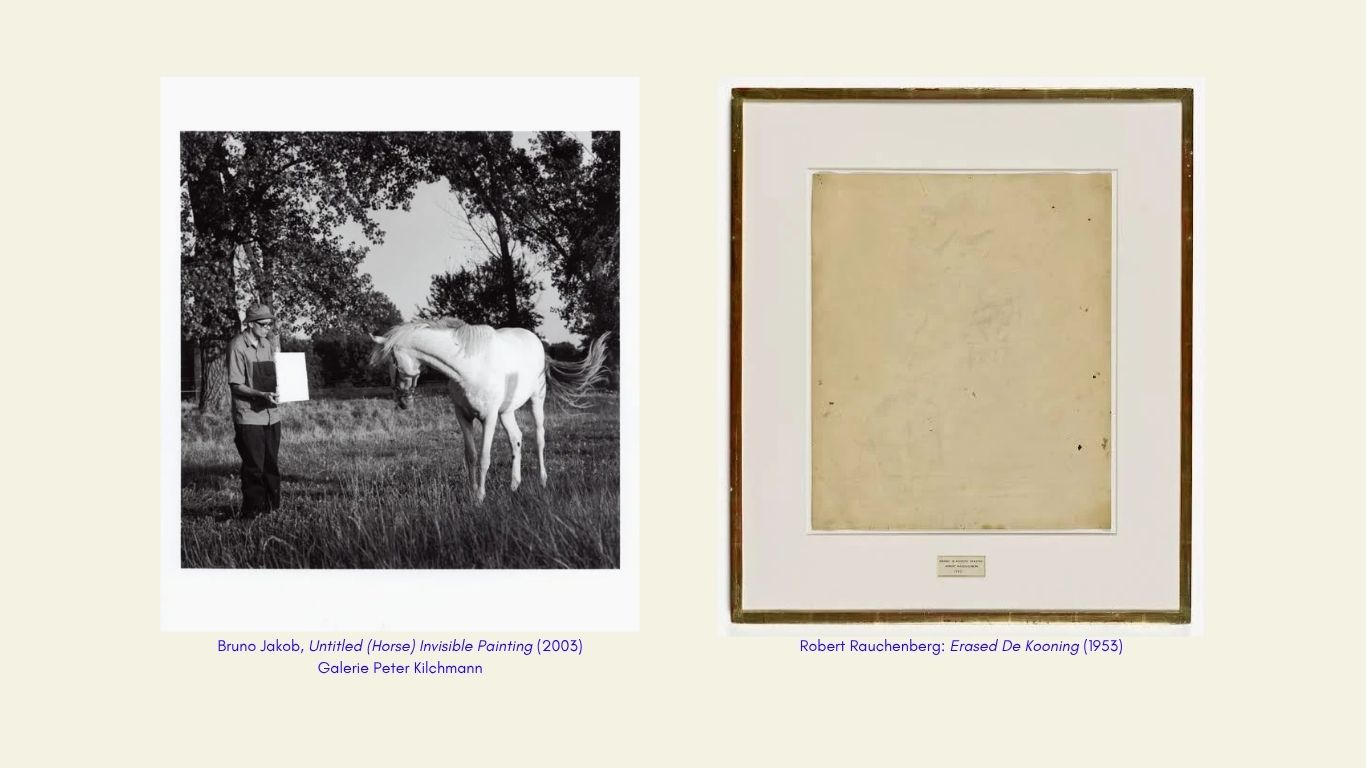
A fun session on the concept of the invisible; how does it relate to the visible world? The session will conclude with an exercise.
EXPERIMENTS IN SPEED OF THOUGHT
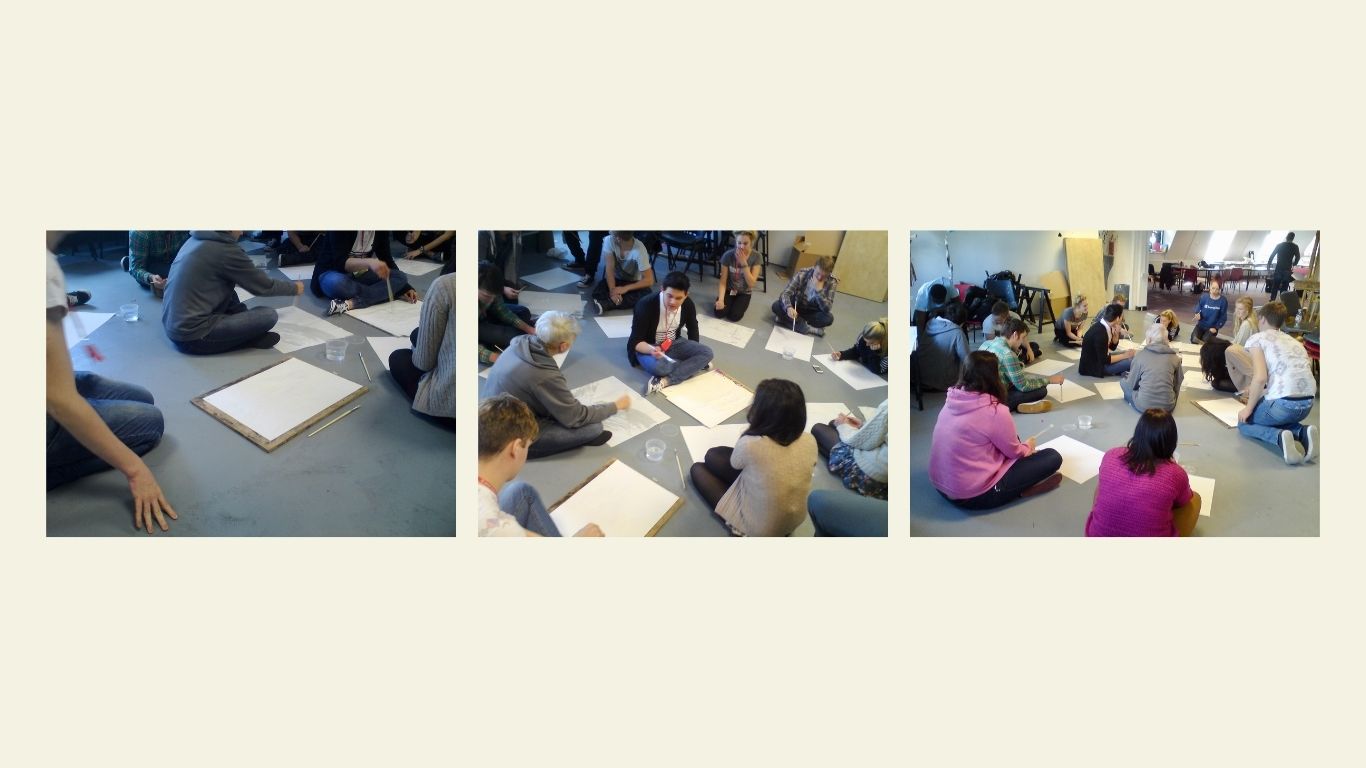
This is an experimental event-like project designed to help art students with the work they are concerned with in that moment. It is noisy, fun and generates ideas quickly.
RULES AND CONVENTIONS IN ART
This concerns a performative game that challenges the students perception of how art ‘should be done’. The group is taken out into the town or city, where a small intervention is staged in front of unsuspecting members of the public. This is hardly noticeable and quite innocent although it may pique the curiosity of those who witness it, and raise a smile. The project enables the student to understand just how regulated the idea of art is, and with luck unleashes their own creative potential a little better.
IPCRES FOLLOWING EVENTS
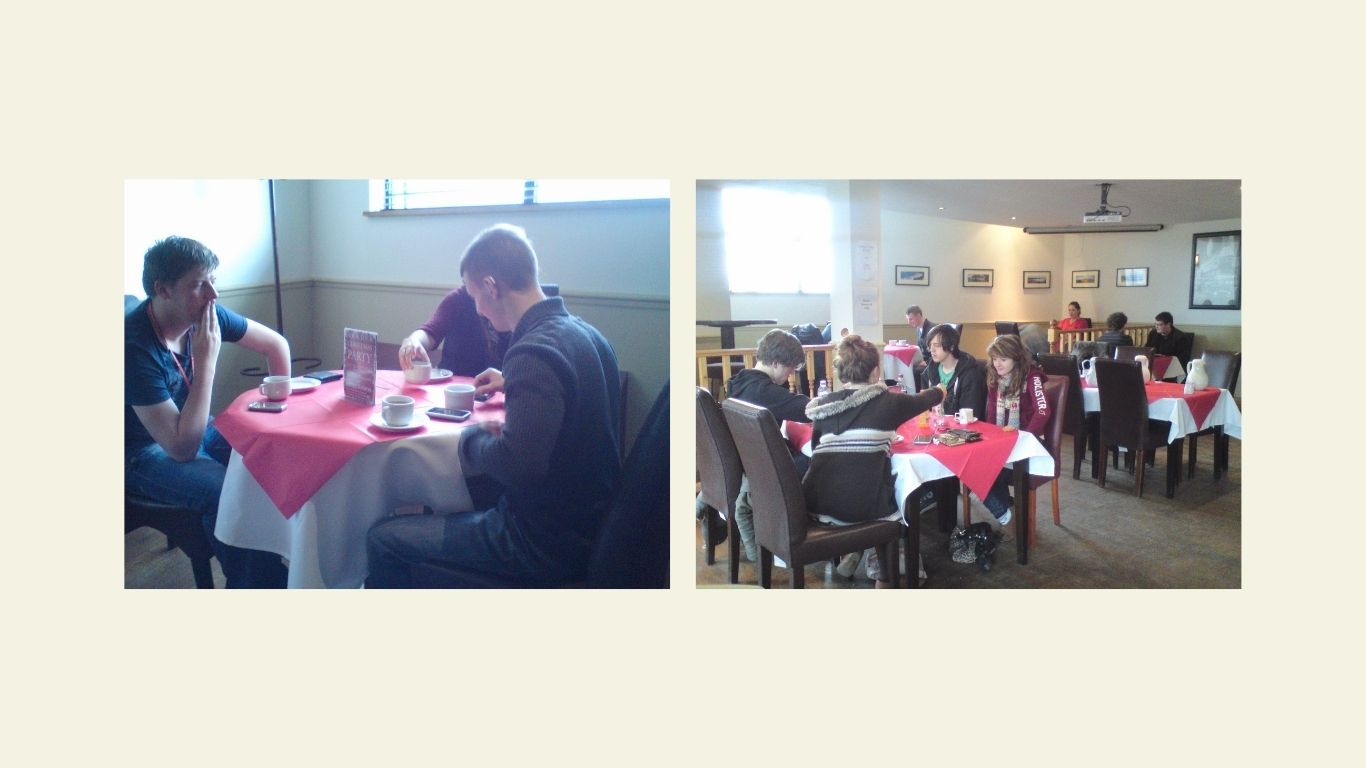
This is a photographic project for older students. It places the art-event into a sports scenario, and so introducing the students to some early historical forms of event led art. It also begins to break the students resistance to the ‘categories’ of life, allowing them to understand the potentiality of cross-reference and the construction of combinations in terms of creativity.
AN INTRODUCTION TO `PATAPHYSICS
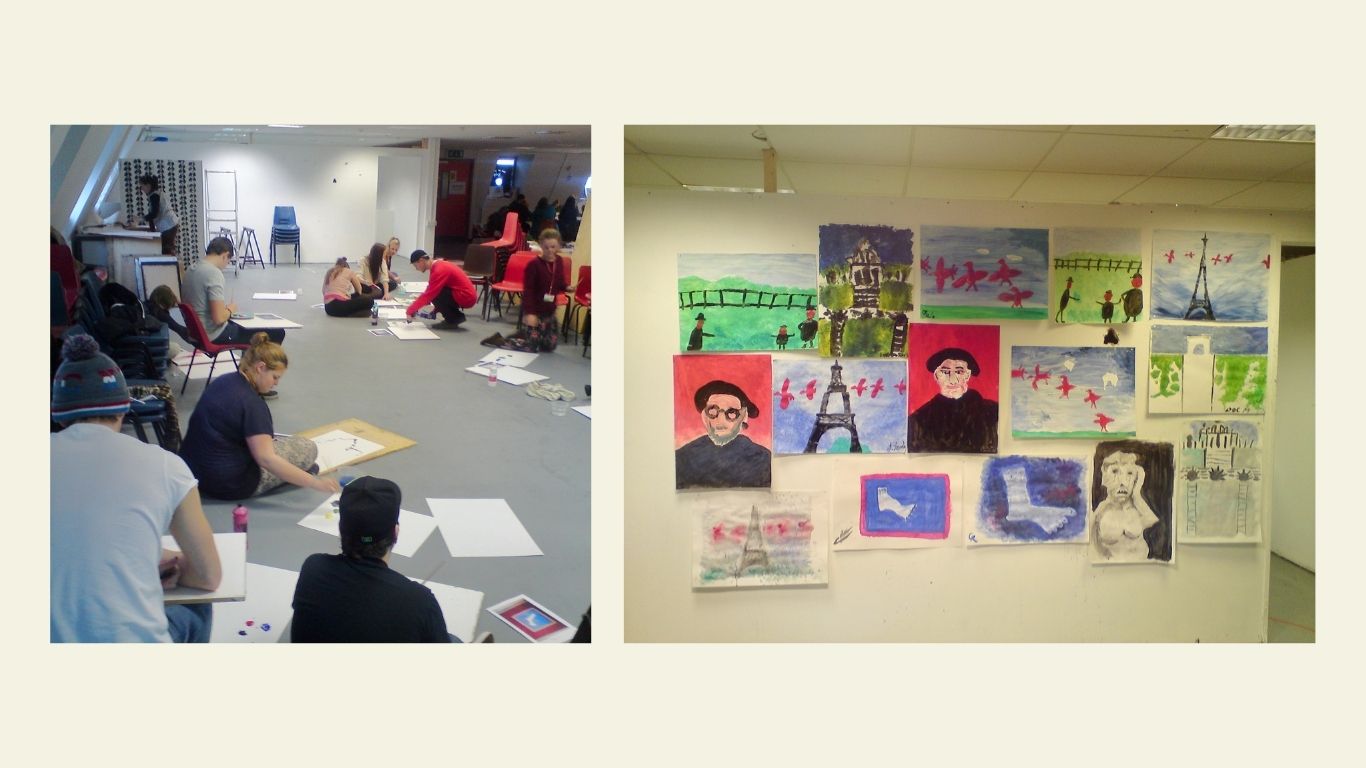
A recreation of a recreation of a group of ‘absurd’ and comical paintings. This references the classical method of learning from ‘a master’ whilst subtly making the students think about technique and who judges the criteria for art. Who says what is right or wrong? Who decides what is great?
THE INFINITY DOCUMENT
An introduction into the concept of walking and art, asking what effect does walking have on the creative process? And what are the potential outcomes of walking a terrain and its ability to generate stories, art, experience?
CONCEPT CIRCLES/DOODLE PANELS
A project to help students fully explore a theme or concept. This is an interactive participatory task where all students are set to work via prompts in order to help the group explore an idea to its full potential. This task can be done in tandem with another similar project called THE TABLE OF CONNECTIVITY.


