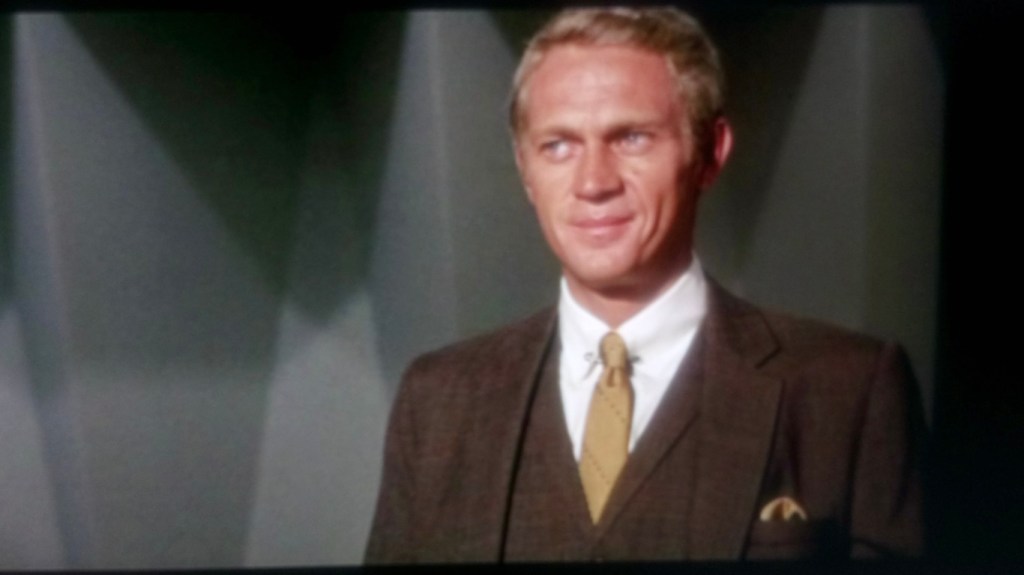
The photograph of Steve McQueen is from the iconic 1968 movie ‘The Thomas Crown Affair’, in which he plays a millionaire businessman who also robs banks as a creative outlet.
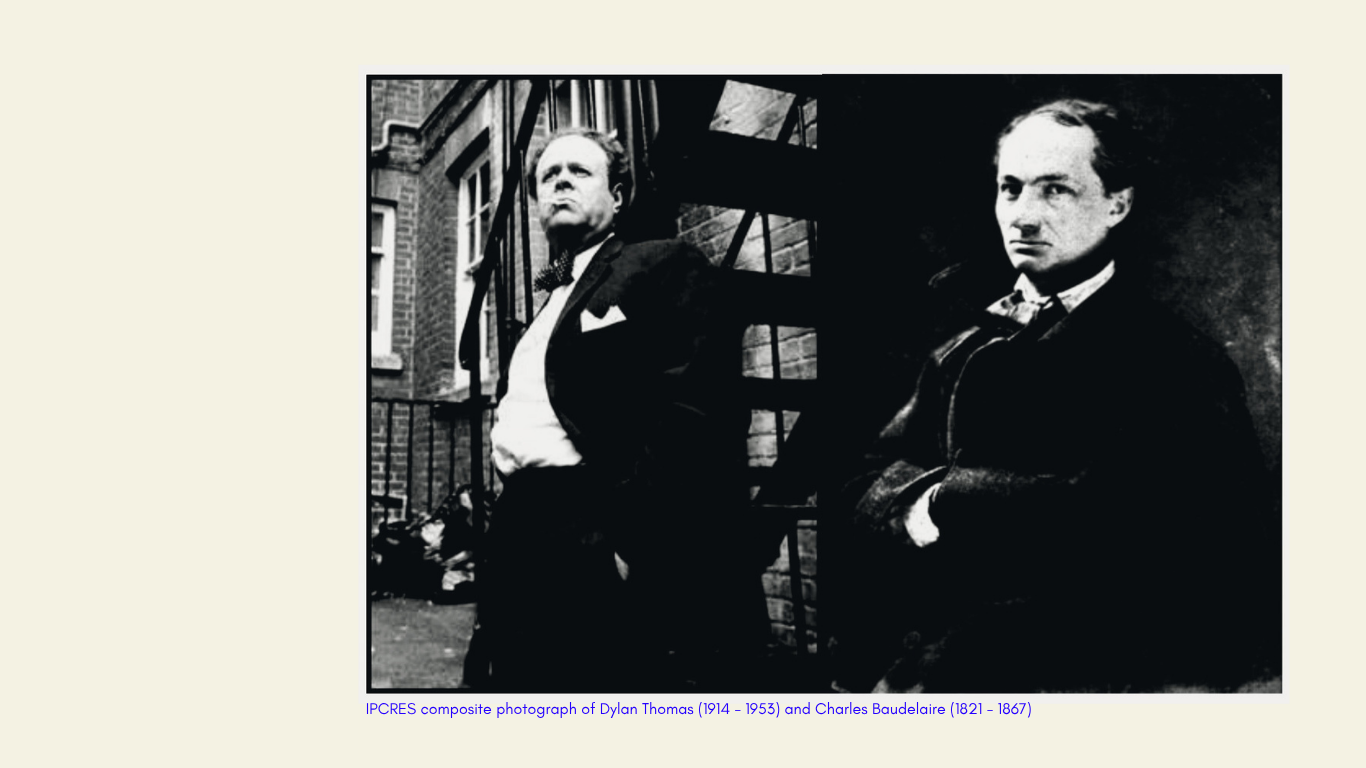
There are many photographs of Dylan Thomas standing in an often borrowed rumpled looking suit of clothes and looking suitable poetic in his gesture. It is the poet’s lot to stand defiantly flouting the formality of society, very often through a suit and an insouciant gesture staring back at the amorphous mass of a crowded humanity. The photograph is often the site of this encounter.
The poet, like Thomas of course is notorious, think of Felix Nadar’s photograph of Charles Baudelaire staring back at a massed humanity through a lens he regarded with both disdain and suspicion. It is the relation to the crowd though that is vital, the strained negotiation between the one and the multitude. Richard Avedon once wrote that the portrait was akin to the action of ‘borrowing dogs’, as his family had often done for their own family portraits when he was young; the inclusion of a dog giving the family an instant respectability and cohesion. Dylan’s suit borrowing was perhaps something similar, acknowledged as a gesture towards formality, a negotiation with the crowd.
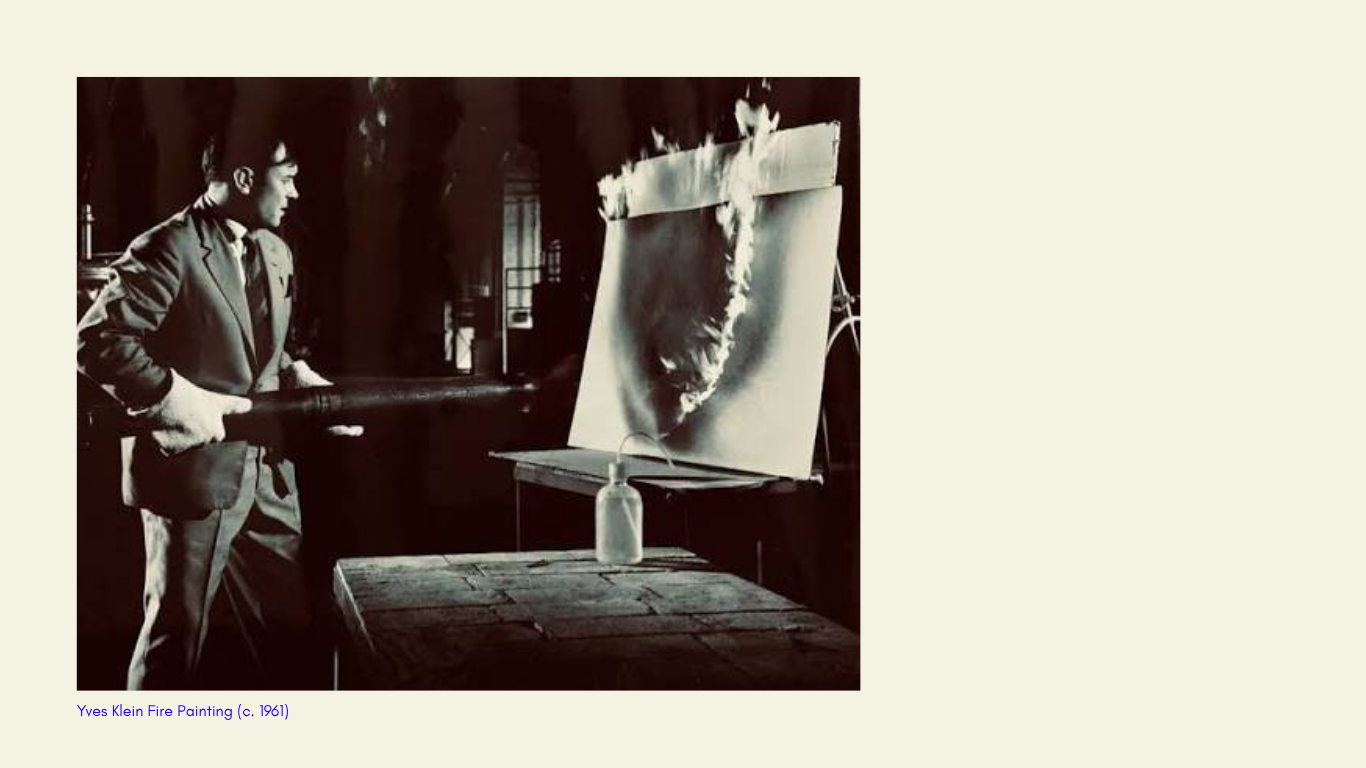
The suit however is mostly seen as a symbol of conformity, it belongs to the political and business classes. It is here where the double articulation of the suit comes into play, as its image of conformity by necessity also contains its seed of rebellion. There is something interesting about Thomas’ wild unpredictable creativity when it is cloaked in the convention of a suit. The suit becomes subversive, acknowledging the borrowed dog’s potential to bite behind its harmless appearance as supplement. In this sense it is the perfect attire for pure unconstrained and unpredictable creativity. Think for example of the artist Yves Klein attacking his canvas with a huge flamethrower dressed in suit and tie.
The photograph achieves a similar result, it cloaks a subject in normality, especially in its official capacity. Maurice Blanchot claimed photography turned each of us into passive symbols of the system, vassals of ‘the man of the government’. What better place for the creative infiltrator to hide themselves, literally undercover of their own clothes. Dressing ‘creatively’ is an attempt to signpost one’s creative attributes, the subversive creative may well decide to infiltrate using the suit as a tactic of surprise, a form of camouflage and confusion that utilises undecidability. Neither the suit nor the photograph can represent a life-force or the intricacies and paradoxes of a subjectivity. They both toy with the concept of the ‘clone’, and as we exist increasingly under the sign of statistical prediction, with non-computational creativity marginalised, perhaps both the ‘suit and the photograph’ now represent obscure spaces for experiment.
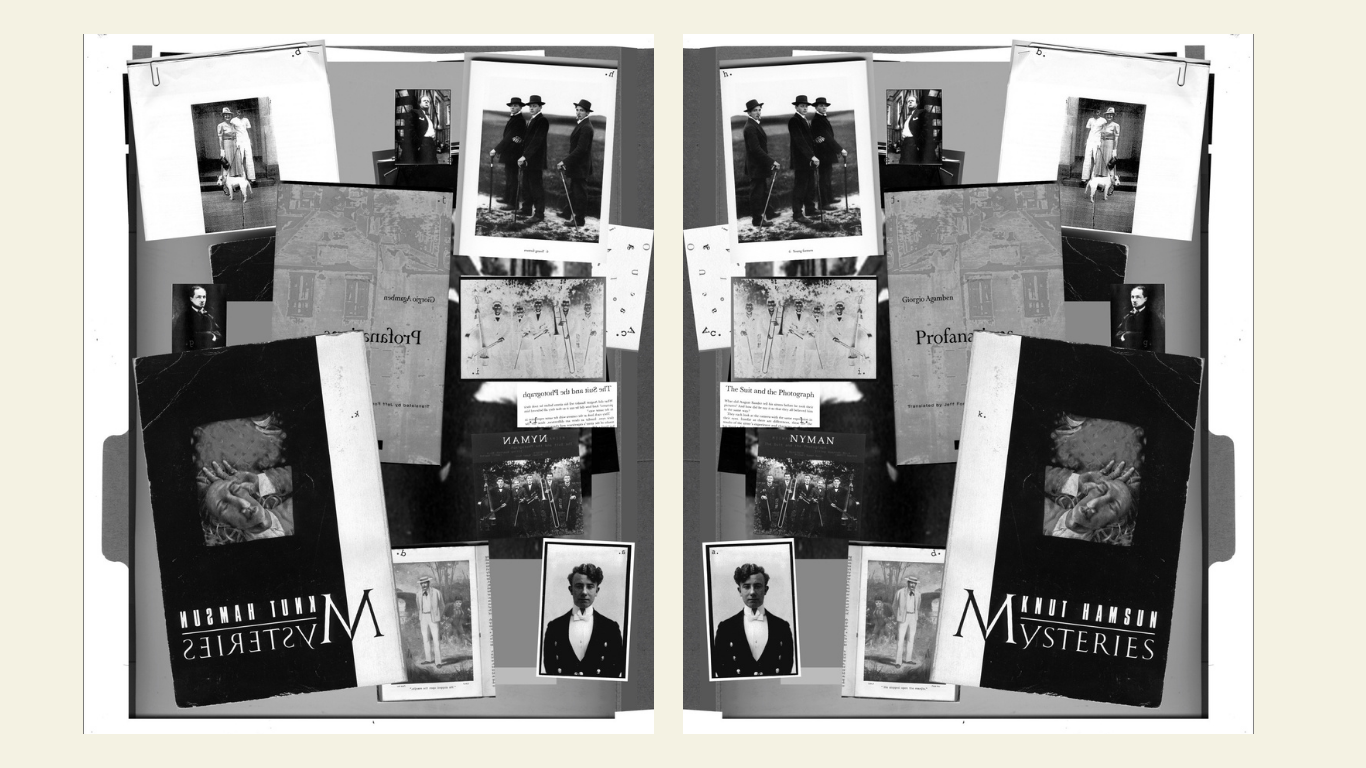
In 1998 composer Michael Nyman made an album called The Suit and the Photograph; on the cover is a photograph of a band of country musicians by the German photographer August Sander. Nyman always equated this photograph with his own band of musicians, citing the critic John Berger, who notes that the suits deform the working class rural men just enough to ‘undermine physical dignity’. The title of the album recognises the surface materiality of the suit and the photograph but cannot approach the beauty enveloped in either the string quartets of the album, or the musical poetry that the men in the photograph presumably embody beneath those shabby suits.
There are other instances of the wandering poet/musician in the arts, think perhaps of Knut Hamsun’s character Nagel, from the novel Mysteries, an enigmatic stranger dressed in a yellow suit and holding a violin case who infiltrates a community. The suit as both surface and performance as Avedon has noted; constituting an interface between the fantasy of the individual and the brute mass of the crowd.
The suit and the photograph both create an image yet simultaneously whilst projecting it they hide something much more vital. They produce an impervious surface that is difficult to penetrate, for instance what are the two great poets above thinking? The photograph works with a certain exigency in that it separates an individual from the crowd by demanding a name, the suit shouts conformity and anonymity, allowing the wearer an element of surprise. As Giorgio Agamben says: ‘ The photograph is always more than an image: it is the site of a gap, a sublime breach between the sensible and the intelligible, between copy and reality, between a memory and a hope.’ (Agamben, Judgement Day). The suit worn properly can also achieve this.
IPCRES proposes taking a large yellow suit into the crowds of the city. Passers-by being asked to pose in the suit for a photograph, reflected in the plate glass windows of the arcade as the crowd flows by. The photographs would be of the order of both Sander and Nadar as portraitists, and produce for each passer-by the figure of the poet standing awkwardly isolated from the rest of humanity in a borrowed suit.
This one stands in unchanging calm
Walter Benjamin c. 1910
Solitary, standing back from the stream of life.
At times casting his deep gaze within himself,
At times bravely looking into the light upwards to us,
At times, too, casting his great look upon the multitude.
His pen writes down lines of verse.
Look upon this one and know – he is the poet.
If anyone has such a suit we can borrow or would like to see this idea come to fruition please get in touch!


Leave a Reply