IPCRES was invited to contribute to an Arts and Humanities Research Council project named Cross Pollination – Re-valuing pollinators through arts and science collaboration. The project was led by Prof. Andrea Liggins, former Dean of Art and Design at University of Wales Trinity Saint David, and Prof. Mike Christie, former Head of Aberystwyth University’s School of Management and Business. The work brought together artists and scientists to examine the threat to the humble honeybee, under threat from intensive farming, habitat destruction, biodiversity loss and climate change, resulting in a widespread decline of pollinators.
IPCRES operatives Dr Paul Jeff, Dr Laura Jenkins, Dan Butler and Simon Kilshaw, working with scientists from Reading University, Dr Duncan Coston, Prof.Simon Potts and Dr Tom Breeze were tasked with creating a project that concentrated on what we would lose through the decline of the honeybee. Whilst the scientists looked at the impact of the loss of pollinators on our foodstocks the IPCRES project looked imaginatively at what we could lose from our interactions with nature on an experiential level. For both scientists and artists, their work is often a leap into the unknown, with both groups asking the question: ‘What if?
Dr Natasha de Vere, a scientist who worked on the project explains “Artists and scientists have different training and this affects their views of the world. Working with artists helps me see the work from alternative perspectives, helping me come up with new ideas and think more creatively”.
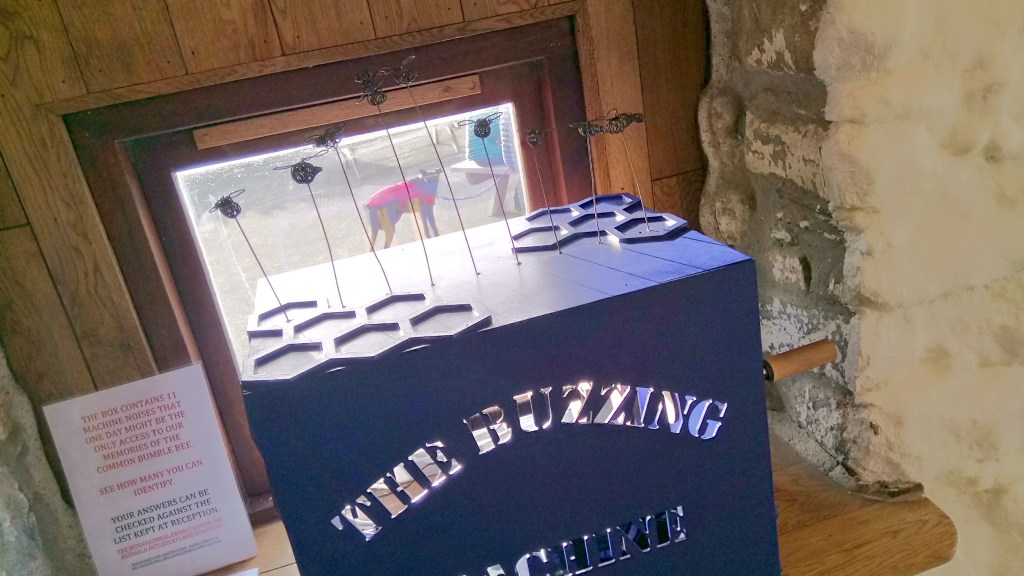
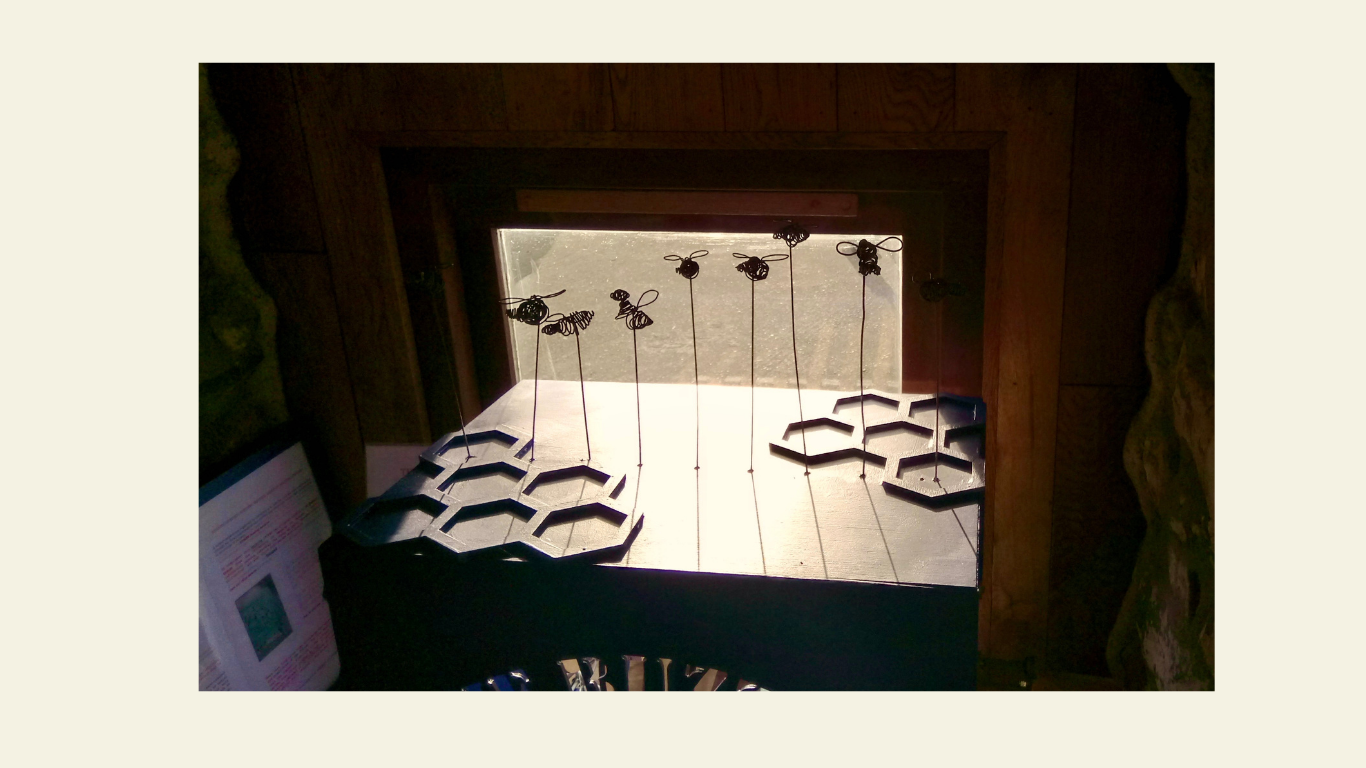
The IPCRES project became the design and build of a ‘Buzzing Machine’ that imagined a world without bees where people would be reminded of the bees by the sound of industrial objects that were heard as similar to the buzz of the bee. Purposefully ironic in the sense that it was precisely this form of industrial and technical ‘progress’ that was destroying the habitat of pollinators, there was also a sense of involuntary memory in the sense of Marcel Proust’s Madeleine cakes, which when dipped in tea brought back poignant memories.
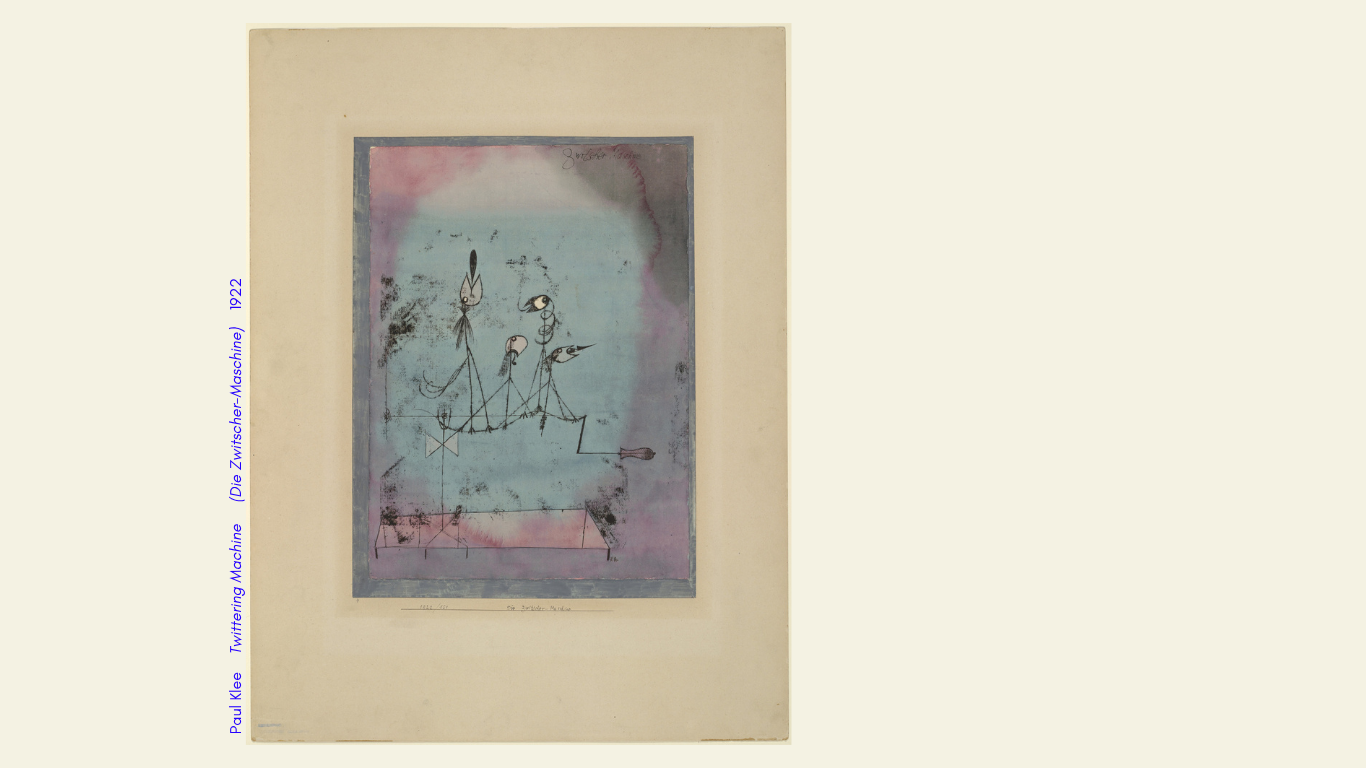
The instigation for the project came from a painting by Paul Klee from 1922 named ‘Twittering Machine’. This work shows a hand-cranked contraption to which four birds appear to be tethered in a union of nature and the industrialised environment, this work comments on the uneasy balance between our natural pollinators such as bees, and the industrialised ‘climate’ that we have brought about. Whilst Klee’s machine seemed to focus on the looming catastrophe of man’s effects on the natural world, it also reflects on the effects of machines on civilisation from the memory of the recent devastating world war. The ‘Buzzing Machine’ is primarily concerned with re-discovering the harmony that is necessary for all species to work together as one large machine. This means being mindful of everything that can be lost that consequently becomes just a shared memory. In China mechanical pollination is now well underway due to extensive use of pesticides diminishing the bee population. Human workers are employed to cross-pollinate fruit trees and other plant species by hand and machine.
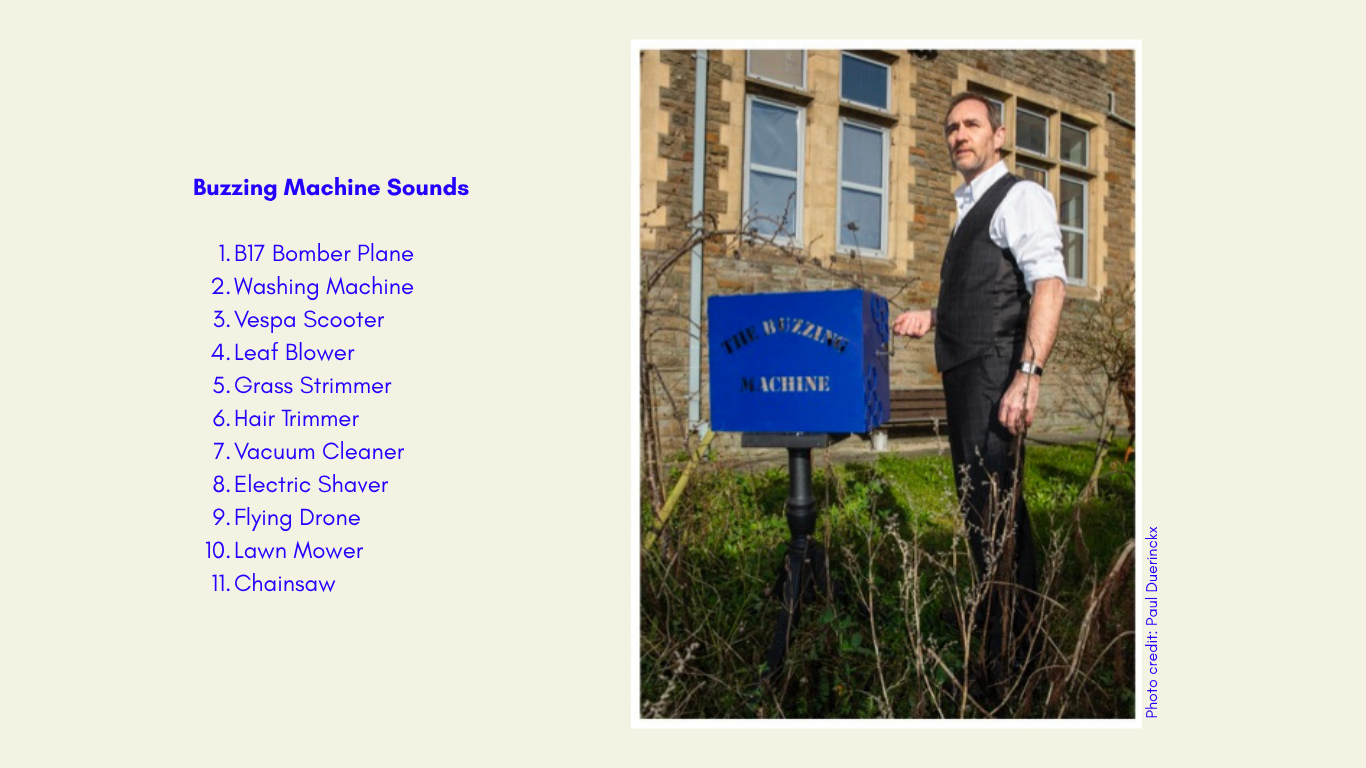
The Buzzing Machine is a wooden box, consisting of a series of wooden cogs that are turned by a handle on the side. This turning motion animates a swarm of metal bees on top of the box. Inside there is a sensor that when the machinery is operated turns on a mini-computer that generates a series of buzzing sounds generated by familiar machines. The machine is painted Yves Klein Blue in an attempt to access the void of the virtual, a space to where the bees could have been banished. Bees have long been considered the messengers of the Gods and predictors of the future. For that reason, it is rumoured that the composer Sibelius in his old age would compose in his garden even though plagued by bees. It provided him with a constant reminder of the difficulties of translating the heavenly muse whilst still wrapped in his mortal coil.
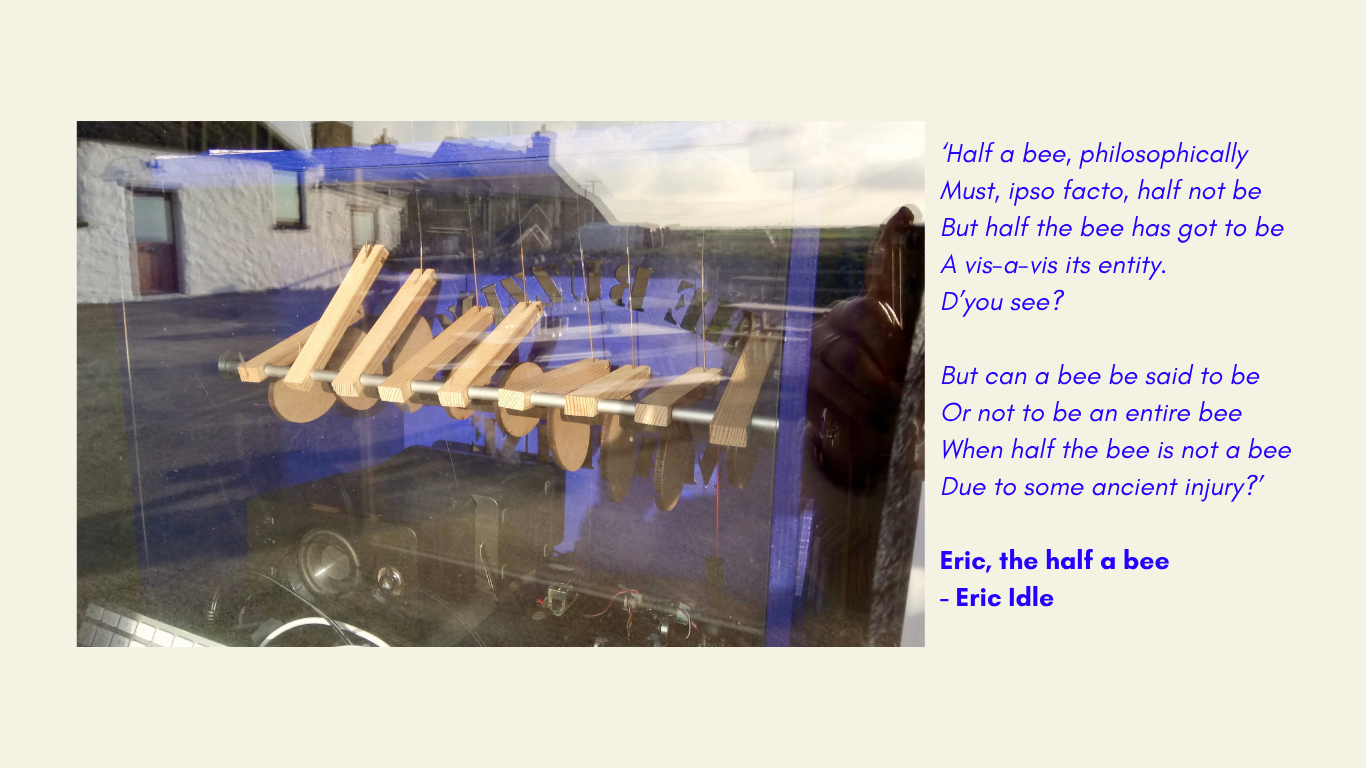
The Buzzing Machine was displayed at The National Garden of Wales, and Dr Beynon’s Bug Farm in West Wales for a final conference in which results were shared across the project.


Leave a Reply