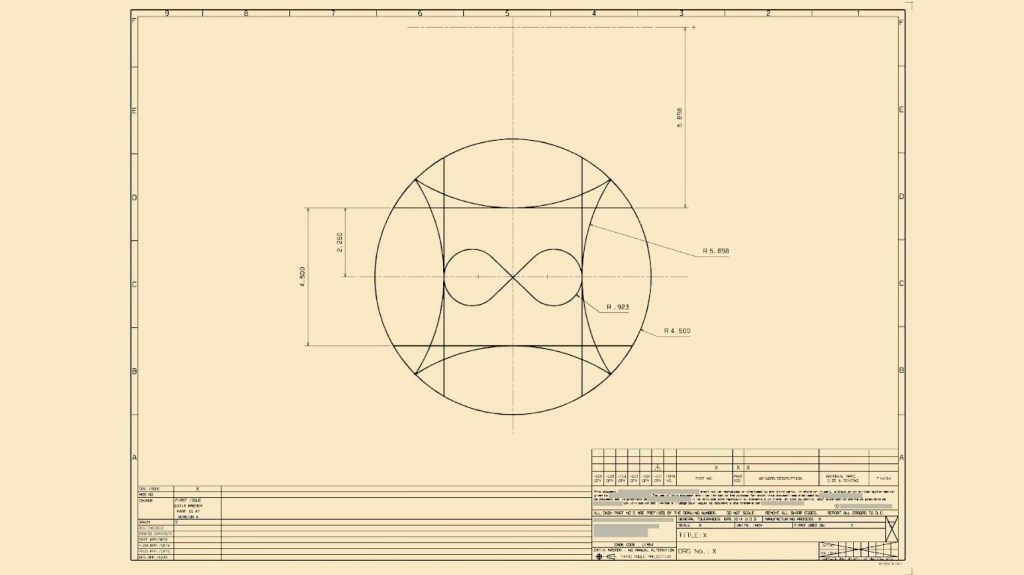
The combination of opposites tells us nothing; it forms a net so slack that everything slips through. – Gilles Deleuze (1988)
In this work IPCRES extend their experimental instincts into the space of the philosophical diagram. ‘In a conceptual diagram, the lines marking out a space are abstract traits. The diagram thus does not represent, but rather maps out possibilities prior to their appearance, their representation’ Jakub Zdebik (2012).
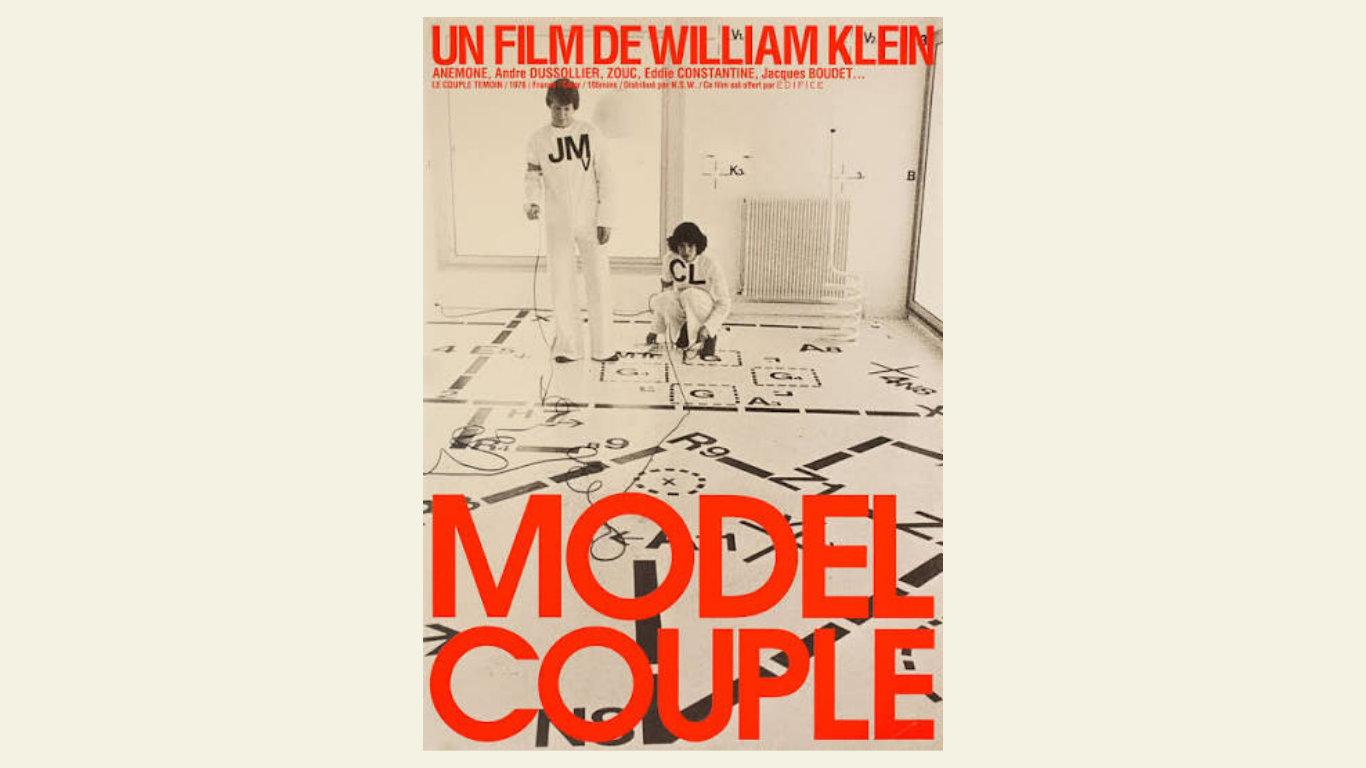
This project is an attempt to chart the relationships and trajectories between ‘couples’, from lovers to binary couplets, perhaps even God and man [sic]. It traces the movements between two entities as they negotiate each other, moving both toward and away. It was inspired by The Model Couple, William Klein’s 1977 film of a dystopian future where the couple of the title are subject to experiment and documentation night and day by the fictional ‘Ministry of Future’. Coupled is a performative play of movement where an assembled congregation is invited to follow a ‘couple’ into the future.
The event was performed in Cardiff Bay, Wales as part of the proceedings of a Double Dialogues conference. The conference was called Precursors into the Future, hosted by Cardiff University and organised by Double Dialogues periodical, Deakin University, Australia.
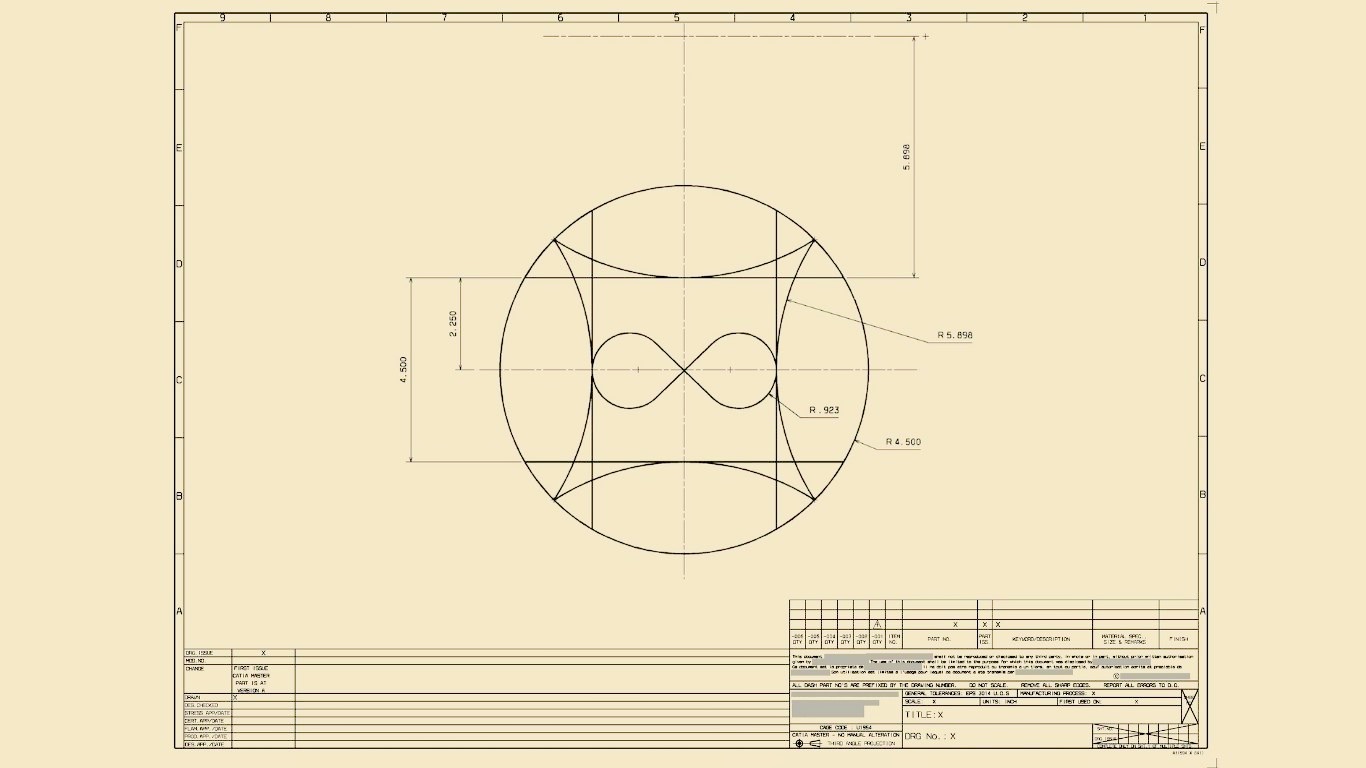
IPCRES performs a diagrammatic treatise on the relations of the concept, couple, across the floor of a space. Our interest in photography is evident as each couple take a photograph of their ‘partner’ in order to map the space between. This enables the documentation to function in a way in which it becomes part of the experiment. In turn, this references Klein’s friend Chris Marker and in particular his film of black and white stills La Jette (1962). Here a future is also intuited in the interstices of photography with a movement into possible futures being negotiated via a matrix of recollections and connections.
The initial ‘couple’ (IPCRES operatives) enter the diagram, one person following the curved lines in an anti-clockwise direction, their partner following the straight lines from the opposite side and in a clockwise direction. This is a slow procession and on every third step our couples will take a photograph of each other (plotting a position). Further participants will form another couple and enter the diagram when they have free space, both observing and recording each other whilst moving through space and following the dotted line of the diagram. The diagram was a design of our own.
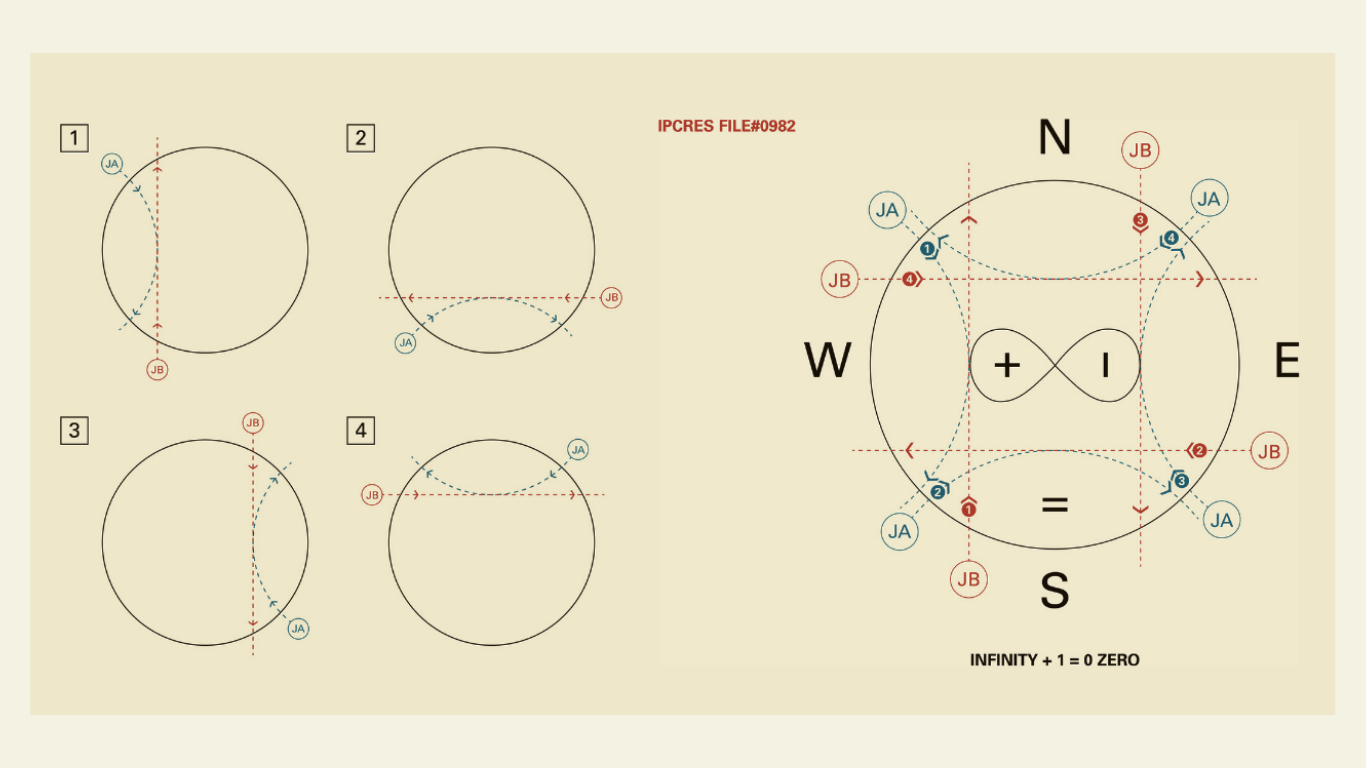
The ensemble will repeatedly inscribe the arc of ‘pure’ relations between two entities. Where the arc touches the line we evoke Walter Benjamin’s conception of translation, where trajectories touch briefly at a site of potential. This is dependent on chance, relying on the speed and relative position of the couples as they negotiate this meeting point where the straight line fleetingly touches the arc.
This experiment negotiates the play of concepts, the performative encounter, photography and measurement and the complex interplay of thought and embodied movement. Perhaps it is possible to conclude that thought = event = its record, their equivalence being that which constitutes Francois Laruelle’s concept of non-photography/philosophy. Photography, diagram and participatory performance here as ‘flat’ thought indicating a field of infinite materialities.
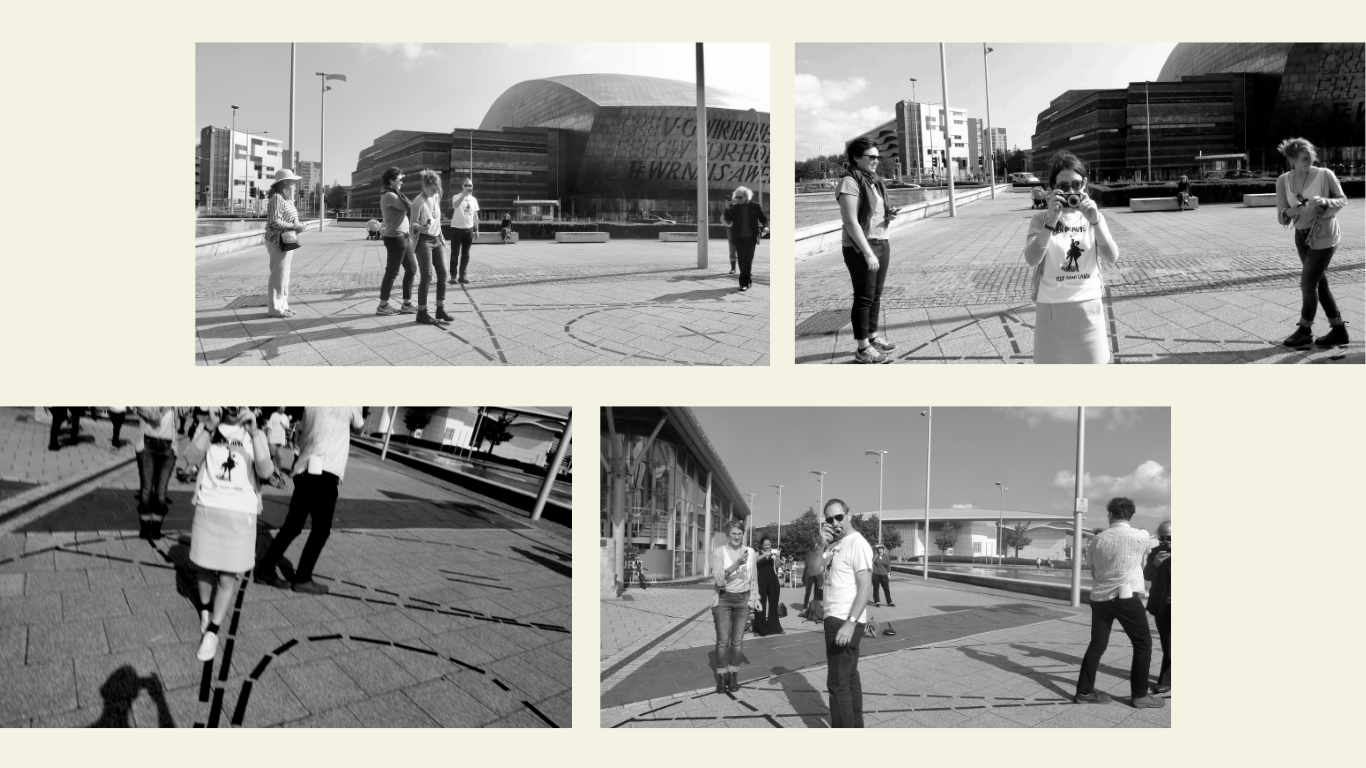
The results of course were hilarious, even with philosophers as participants! And just like Deleuze’s conception of the diagram we were quickly shown its relationship to chaos.
Post-Script: Near the end of Exploits and Opinions of Doctor Faustroll, Pataphysician (Alfred Jarry 1911 [1898]), there is an attempt to map the surface of God. After numerous calculations one conclusion is that ‘God is the shortest distance between zero and infinity’, redefined definitively as: GOD IS THE TANGENTIAL POINT BETWEEN ZERO AND INFINITY.
A ‘tangential point’ being ‘the exact location where a straight line, curve or surface touches another curve or surface at a single point without crossing or intersecting it‘.


Leave a Reply