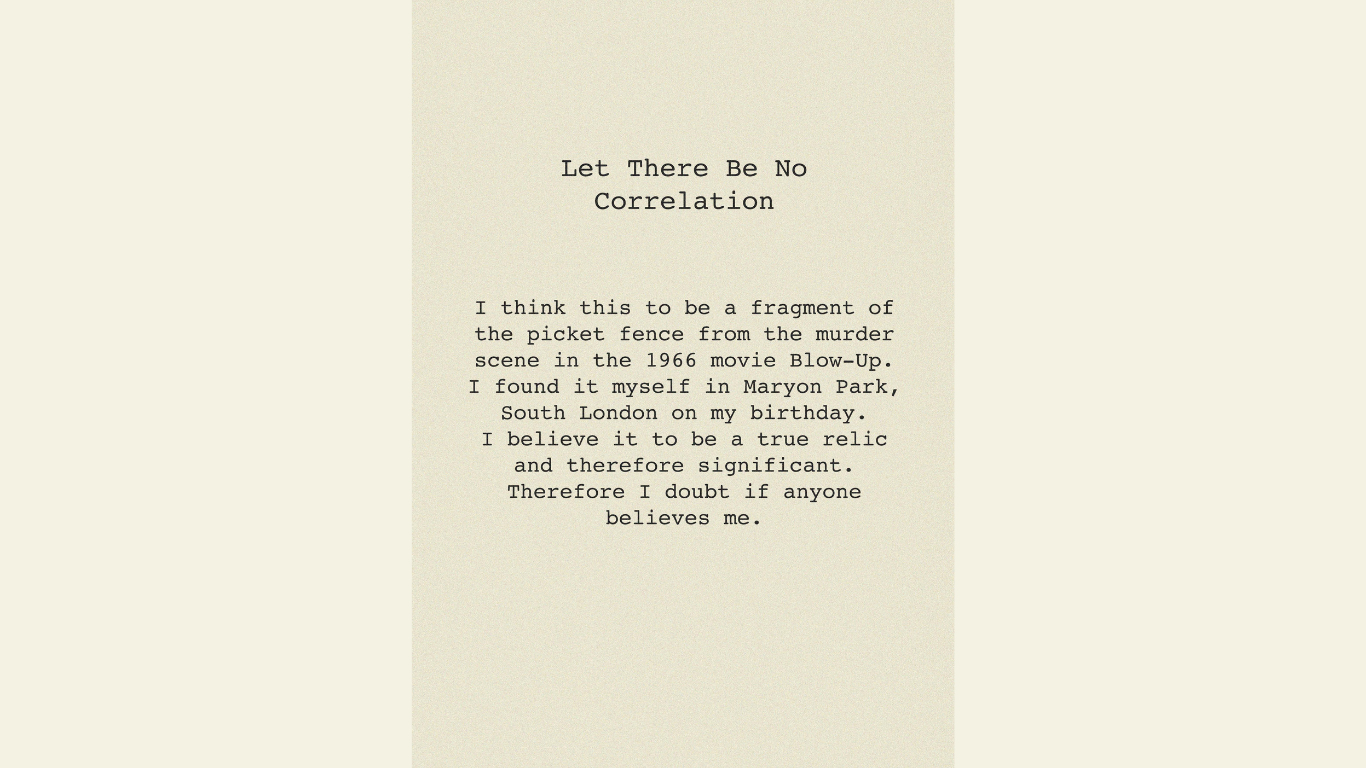
This is an artwork that in typical IPCRES fashion was instigated through thinking a combination of ideas, objects and events. The instigating event in this case being our visit to Maryon Park in South London for a birthday celebration. This came about through an abiding fascination with Michelangelo Antonioni’s 1966 film, Blow-Up, for which the park was a central location. In the film a photographer, whilst looking for images for his book photographs two lovers arguing in the park. When blowing up the negatives in the darkroom he becomes certain that he can see an assassin in the bushes behind a picket fence. He returns that night to the park to find the body of the man, which has mysteriously disappeared when he returns with a friend the following morning.
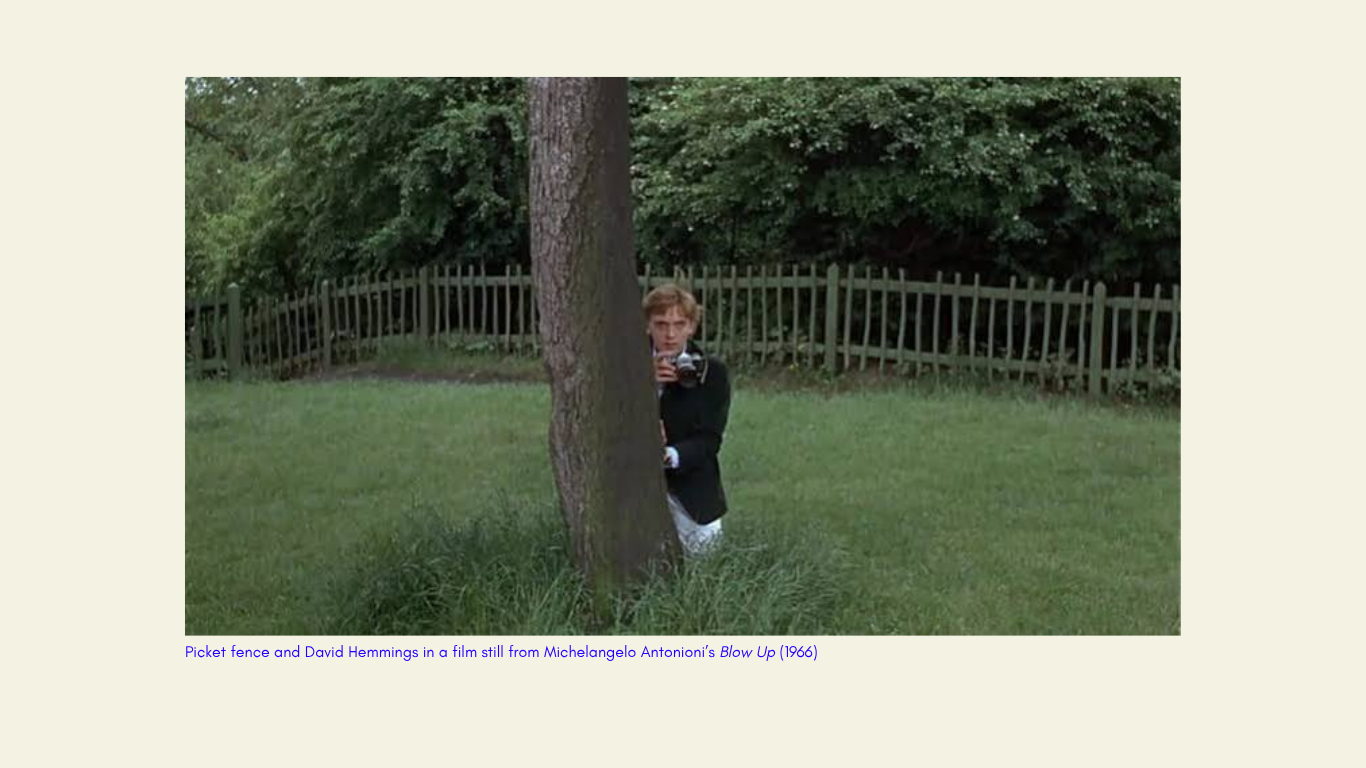
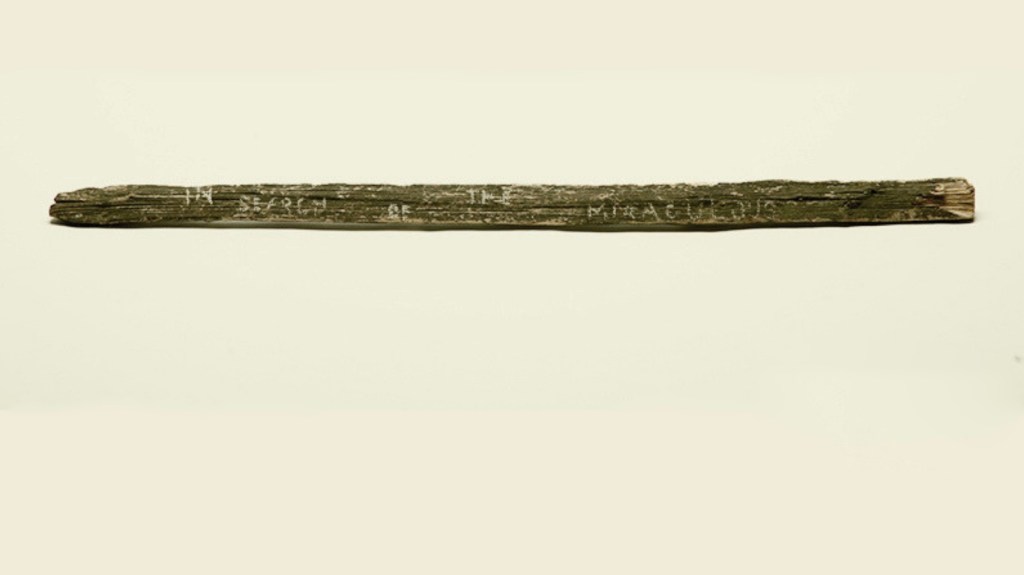
There follows an obsession to prove that this event really happened as he believes in the proof of his photographs. On our visit years later the park looked and sounded much the same, however the picket fence was gone. Determined to find something IPCRES searched the undergrowth and came up with a section of fence from which they took a picket, or slat. IPCRES deemed this a relic, just as the broken guitar neck became in a scene from the film and took it back to the lab.
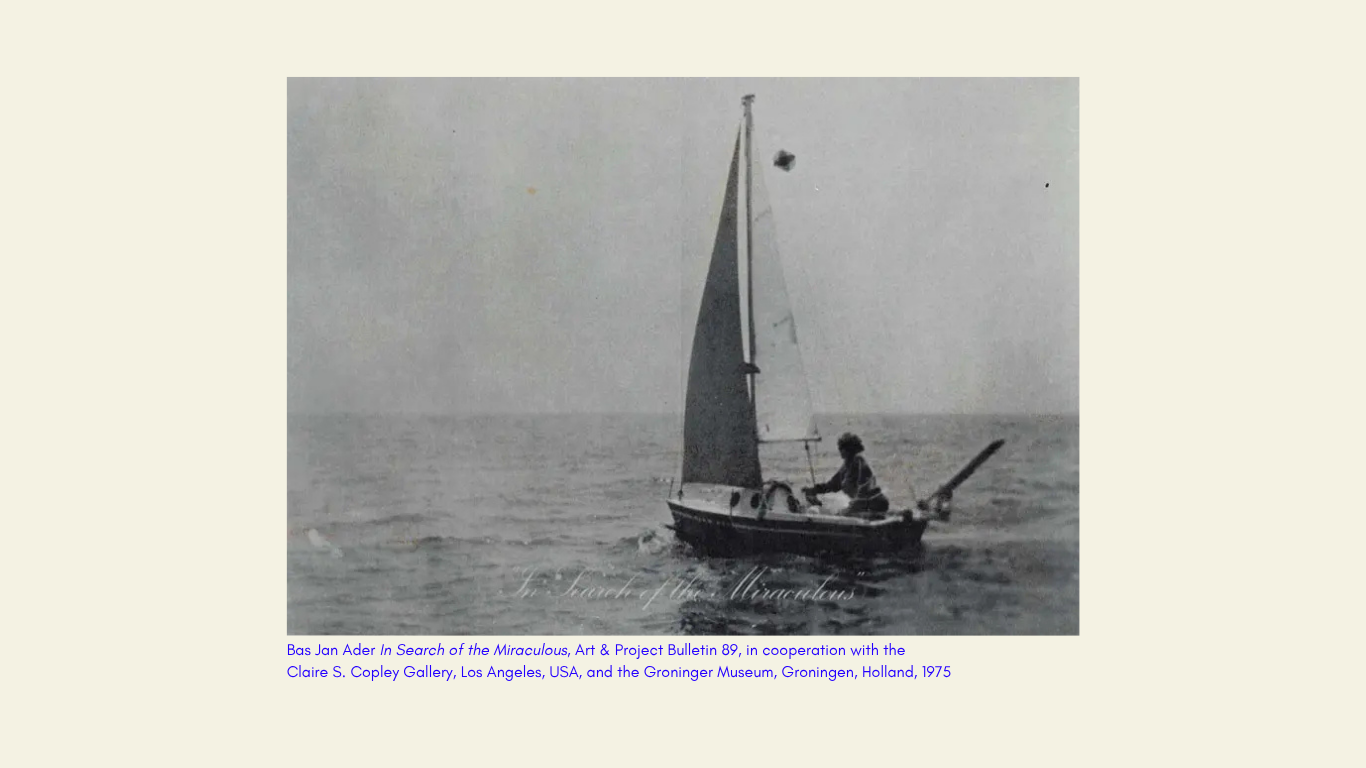
The irony at the end of Antonioni’s film is that the photographic proof turns out to be a series of dots when blown up large. There is no correlation between the event and its supposed trace, the event may or may not have happened. This scenario was then placed by IPCRES into conceptual brackets with a completely unrelated event, that of Dutch artist Bas Jan Ader’s apparent disappearance at sea in a strange work called In Search of the Miraculous (1975). His body was never found. There was obviously no correlation between the two events but we were fascinated in the relation between events or stories and the objects related to them.
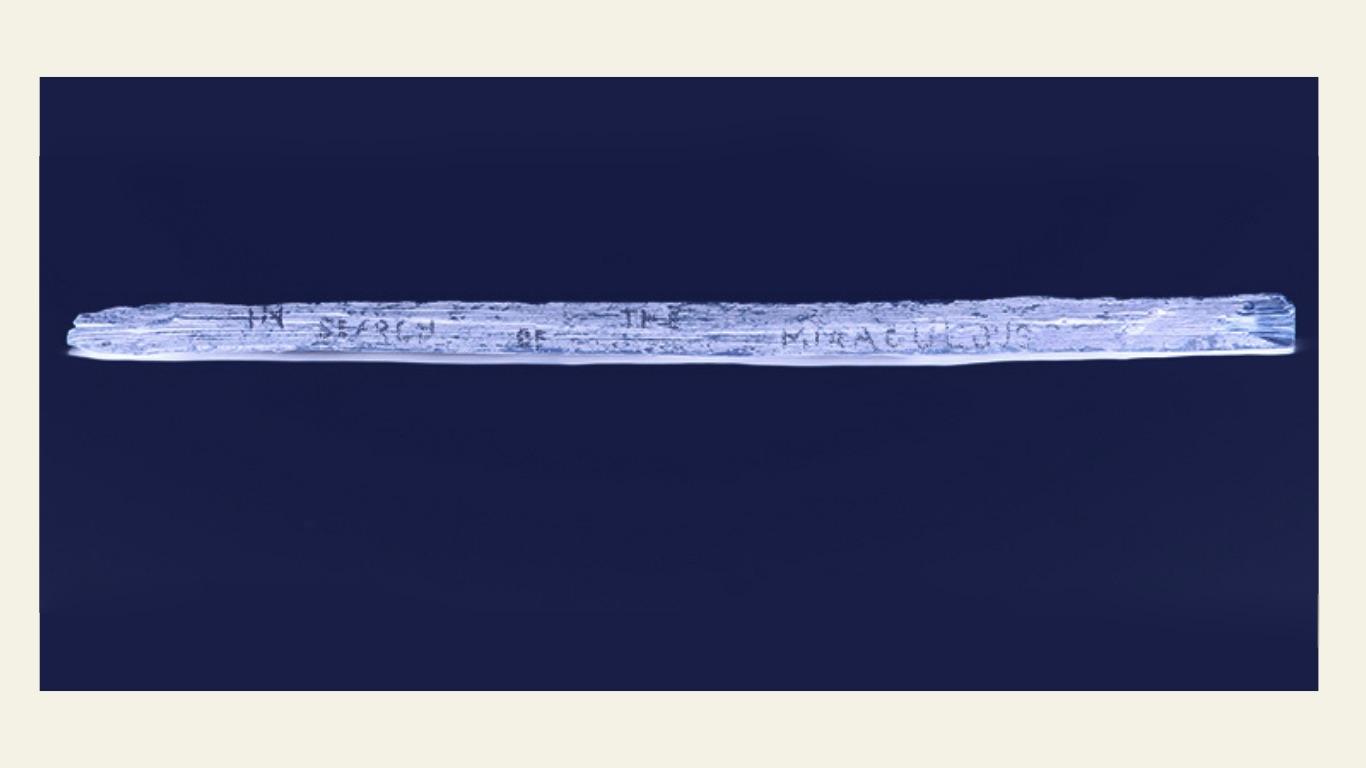
We decided to cross-reference these ideas and began by blowing up an image of the fence picket. To our surprise we found words etched into the image that read, In Search of the Miraculous! We decided to print this onto a sail cloth like the one Ader would have had on his small boat, hung it from a ceiling and placed the wooden picket itself on the floor underneath. On the wall we wrote a cogito that expressed out belief in the relic we had but also the knowledge that there was no proof. The experiment here was to place fact and fiction together as testimony and see where it might lead us. It is noted that Ader left a copy of Georg Wilhelm Friedrich Hegel’s ‘The Phenomenology of Mind’ (1807) in his locker on land.
IPCRES understands from Hegel that consciousness will continually modify an object to conform to its own knowledge of it, until finally after successive modifications of the object through its own experience of it, the fully ‘spiritualised’ object will be recognised by consciousness and know that it is non other than itself.
“For what Hegel saw so acutely is that the necessary entity par excellence could only be the entity that had nothing outside it and that would not be limited by any alterity.” – Quentin Meillassoux.
“By ‘correlation’ we mean the idea according to which we only ever have access to the correlation between thinking and being, and never to either term considered apart from the other.” – Quentin Meillassoux.
By maintaining faith in our picket/relic IPCRES in this artwork are themselves in search of the miraculous, the constant need to prove that everything does not collapse into no/thing/ness with the annihilation of the event, and that the wooden picket itself subsists despite the abolition of every relation-to-the-world (Meillassoux). When the photographer in the film hears the sounds of a tennis game that is invisible to him he still rushes to pick up and return the ball he believes has landed near him. In the face of his apparent death Ader still sails across the ocean searching. Let there be no correlation.


Leave a Reply